In 2026, global digital advertising spending is projected to surpass $750 billion, with Google Ads accounting for a significant portion of this growth. For businesses of all sizes, understanding the Google advertising fee is no longer optional—it’s essential for maximizing ROI and staying competitive.
Many marketers ask, “How much to advertise with Google?” The answer isn’t one-size-fits-all. Costs vary based on industry, competition, ad formats, and targeting strategies. Without a clear budget plan, businesses risk overspending or underperforming campaigns.
In this article, we’ll break down the factors that determine Google Ads costs, explain pricing models, and provide actionable insights to help you plan your advertising spend effectively. By the end, you’ll have a clear understanding of what it really costs to advertise on Google in 2026 and how to optimize your campaigns for the best results.
A Google advertising fee is the amount a business pays to display ads on Google’s platforms, including search results, YouTube, and partner sites. This fee isn’t fixed—it depends on how your ads perform and the type of campaign you run.
Google calculates advertising fees using three main methods:
Several factors influence your Google advertising fee, including your industry competition, target audience, ad quality, and chosen bidding strategy. Higher competition and broader targeting generally increase costs, while well-optimized ads with high relevance scores can reduce fees.
Understanding Google Ads pricing is key to budgeting effectively. Google offers multiple pricing models:
By understanding these models, businesses can estimate their cost Google Ads spend more accurately and select the pricing approach that aligns with their goals.
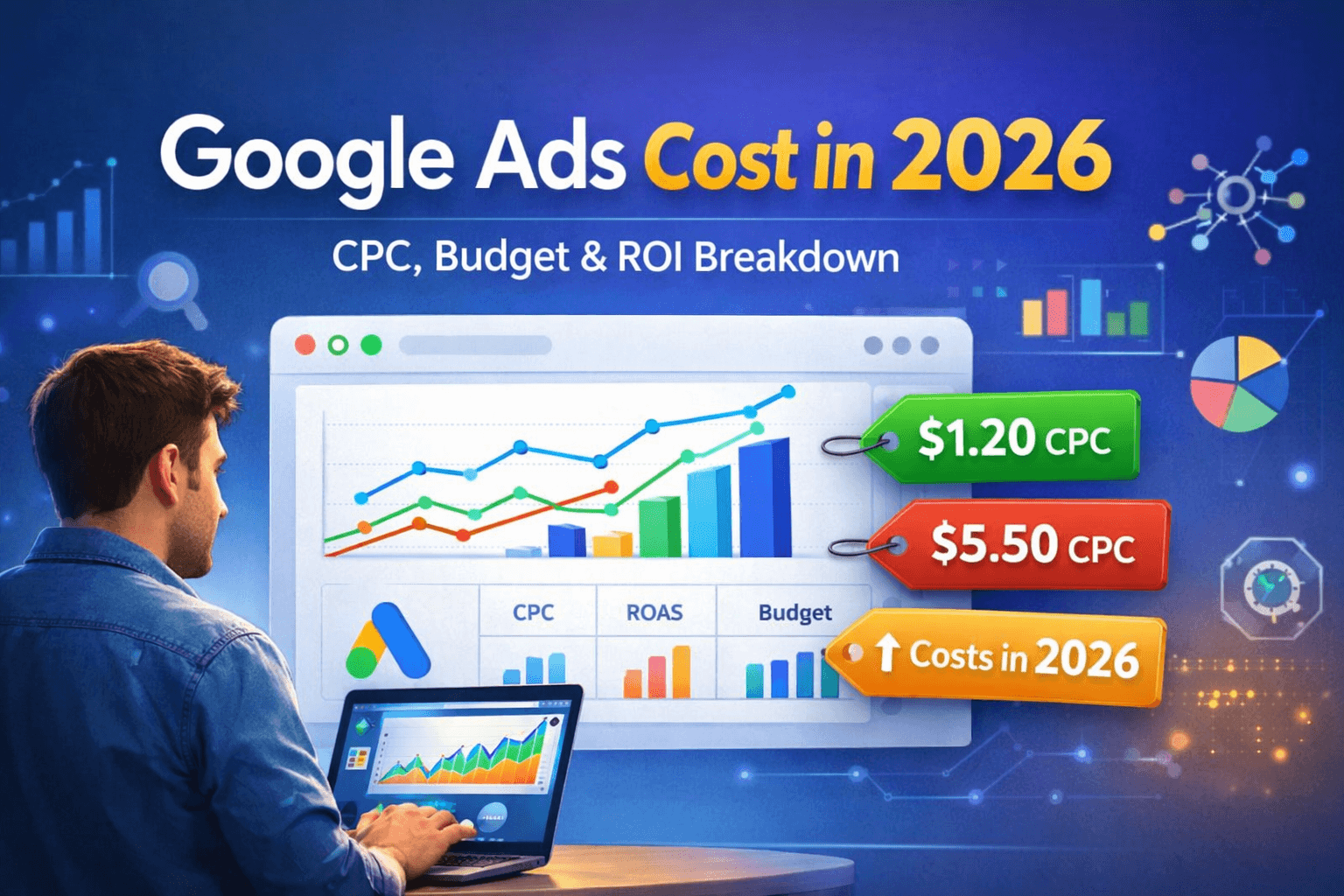
So, how much is advertising on Google today? Costs continue to rise steadily as competition grows. On average:
Compared to 2023, CPC has increased roughly 15–20%, reflecting the growing competition for premium keywords. Businesses that understand these trends and plan their budgets effectively can gain a competitive edge while keeping their Google advertising fee under control.
The Google advertising fee varies significantly by industry. Highly competitive sectors such as finance, insurance, and legal services often have much higher costs per click due to intense competition for premium keywords. In contrast, industries with less online competition, like niche hobbies or local services, tend to see lower fees. Understanding your industry’s competitiveness helps set realistic expectations for your ad spend.
Where and to whom you show your ads plays a major role in pricing. Targeting large, high-demand markets—like major U.S. cities—can increase costs, while campaigns aimed at smaller or less competitive regions are typically cheaper. Similarly, highly specific audience targeting (age, interests, or behavior) can raise or lower your Google advertising fee depending on demand and reach.
Google rewards ads that are highly relevant to users. A strong Quality Score, determined by ad relevance, expected click-through rate, and landing page experience, can significantly reduce your cost Google Ads. Ads with poor relevance or weak landing pages often require higher bids to achieve the same visibility, making optimization essential for cost efficiency.
The type of campaign and ad format also affects pricing:
Choosing the right ad format for your goals—whether driving conversions, awareness, or engagement—directly impacts how much you spend and the efficiency of your campaigns.
Calculating your monthly Google Ads budget starts with understanding your business goals and the costs of your target keywords. A practical approach is to estimate your daily spend based on the expected Google advertising fee and multiply it by the number of days in a month.
For example:
This structured approach ensures that your campaigns are realistic and aligned with your growth objectives without overspending.
Tracking performance metrics is essential to control your Google advertising fee. Key metrics to monitor include:
Regularly reviewing these metrics allows you to adjust bids, pause underperforming ads, and reallocate budget to campaigns that generate the best ROI. Optimization helps you maintain control over costs while maximizing results.
Common errors in Google Ads budgeting include:
By avoiding these mistakes, businesses can better predict how much to advertise with Google and achieve more predictable ROI from their campaigns.

Accurately forecasting your Google advertising fee is easier with the right tools. One of the most essential resources is the Google Ads Keyword Planner. This free tool helps businesses:
Beyond Google’s native tools, platforms like SEMrush, Ahrefs, and WordStream also offer cost estimation features, competitive analysis, and keyword insights. These tools allow marketers to compare expected costs across industries and adjust campaigns before spending real money.
Forecasting ROI is equally important. By combining estimated clicks, conversion rates, and average conversion value, businesses can predict potential revenue and determine how much to invest in Google Ads campaigns. Planning ahead with these tools reduces wasted spend and helps optimize your advertising budget for maximum returns.
Conclusion
In 2026, businesses worldwide are expected to spend over $750 billion on digital advertising, with Google Ads capturing a large share of that investment. Understanding Google ads pricing and managing your Google advertising fee effectively is critical to achieving measurable results and avoiding wasted budget.
From knowing the pricing models—CPC, CPM, CPA, and Smart Bidding—to considering factors like industry competition, target audience, and ad relevance, careful planning ensures your campaigns deliver maximum ROI. Using tools like Google Ads Keyword Planner helps forecast costs, optimize budgets, and plan campaigns strategically.
Whether you’re a small business or a large enterprise, the key is to set a realistic budget, monitor performance metrics, and make data-driven adjustments. Start calculating your Google advertising fee today to maximize ROI and gain a competitive edge in 2026’s digital advertising landscape.